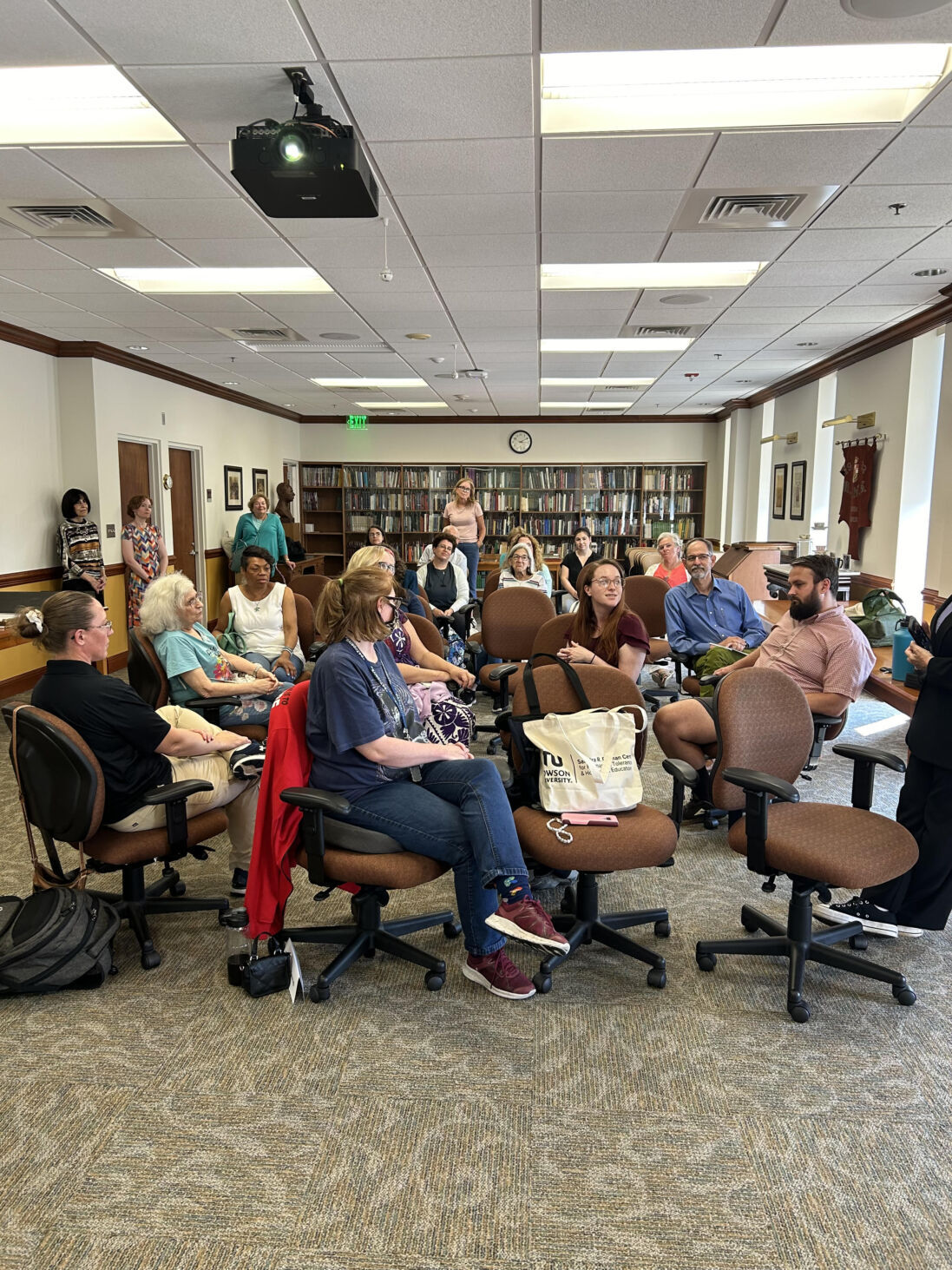
Each summer in Baltimore, area educators from public, private, religious and Sunday schools gather to discuss curriculum about the Holocaust.
For more than two decades, the Holocaust Educators’ Institute has hosted teachers to exchange ideas on teaching about the largest genocide in modern recorded history. It started as a joint venture between the Jewish Museum of Maryland and the Baltimore Jewish Council and is now hosted by Towson University’s Baltimore Hebrew Institute, the Sandra R. Berman Center for Humanity, Tolerance and Holocaust Education and the Baltimore Jewish Council.
This year’s edition took place Aug. 5-7, and Baltimore Jewish Council Director of Holocaust and Countering Antisemitism Programming Emily Goodman said it was another great and constructive event.
“It’s great that every year, we see familiar faces returning. It shows that the work that we’re doing is making a positive impact on these educators, and it’s also really exciting to see new faces and to know that there are people in the community who want to learn about this history and the best way to teach it to their students,” Goodman said. “We had a really great three days, a busy three days, but I would say it was a great success.”
About 30 people attended this year’s Holocaust Educators’ Institute between those who had previously attended and those who were attending for the first time. This year’s theme was, in some ways, a departure from typical Holocaust education. In the past, the event has been centered around literature or art, among other things. This year, it focused on Jewish life in Europe before Hitler came to power.
“It’s teaching a different perspective, and also that context is really important when you’re teaching students, so that they understand that the Jewish people were assimilated individuals and a part of functioning society, and that they didn’t just appear in the Holocaust; that they’ve been ingrained in culture in these places for long, long before Hitler,” Goodman said.
Goodman said that this essential, yet often-missed context, was well received by the crowd, with many specifically noting that it’s something they will work to include more of going forward. Although teachers face time constraints, the importance of details that help students understand who Jews in Europe were before the Holocaust were a standout aspect of this year’s Holocaust Educators’ Institute.
“A lot of people mentioned that they’ve never really thought about teaching life before the Holocaust,” she said. “A lot of times, educators don’t have a ton of time to teach about the Holocaust … it’s really important context that they’ve never considered. And a lot of them now want to expose their students to that to help them build an understanding.”
In keeping with that emphasis, the first day included a talk from Lauren Granite, the U.S. education director at Centropa, a historical institute based in Austria that focuses on prewar Jewish life. Centropa has a wealth of photographs from this time, which were used at the conference.
The Holocaust Educators’ Institute also made another big change this year. Instead of the usual trip to the United States Holocaust Memorial Museum in Washington, D.C., the group took a bus to the Museum of Jewish Heritage in New York City. The idea there was to give returning attendees something different, while also tapping into resources at the museum in New York that might be different from those of the museum in Washington.
The trip lasted more than 12 hours total and included guided tours, professional development and a special session that teachers can apply right to their own classrooms.
“We were joined by Dr. Elizabeth Hlavek, an art therapist who came in and talked about her research in Holocaust art and how she interviewed survivors and descendants of survivors who created these art pieces throughout the Holocaust and after,” Goodman said.
The value in that is priceless, she added.
“She taught about how art was a way that individuals coped with their experiences both during and after the Holocaust, and how art is such a meaningful tool to maintain one’s identity and humanity, and how you can both study art from the Holocaust, but also have your own students create art pieces in the classroom that help reflect what they’re learning,” Goodman said.
Perhaps the most touching moment came during lunch in New York. The group ate with a view overlooking the Hudson River and the Statue of Liberty, the iconic statue that many Holocaust survivors saw as they traveled to the U.S. after escaping Nazi persecution.
Goodman said while they aren’t sure yet what next year will look like, they hope it draws more participants as well as those who have already said they want to come back.
“We’re utilizing all of our resources to make sure that we’re providing teachers with really exciting and tangible resources for their classrooms, whether it’s during the institute or throughout the school year, knowing that they have us as a resource,” she said.
aguckes@midatlanticmedia.com