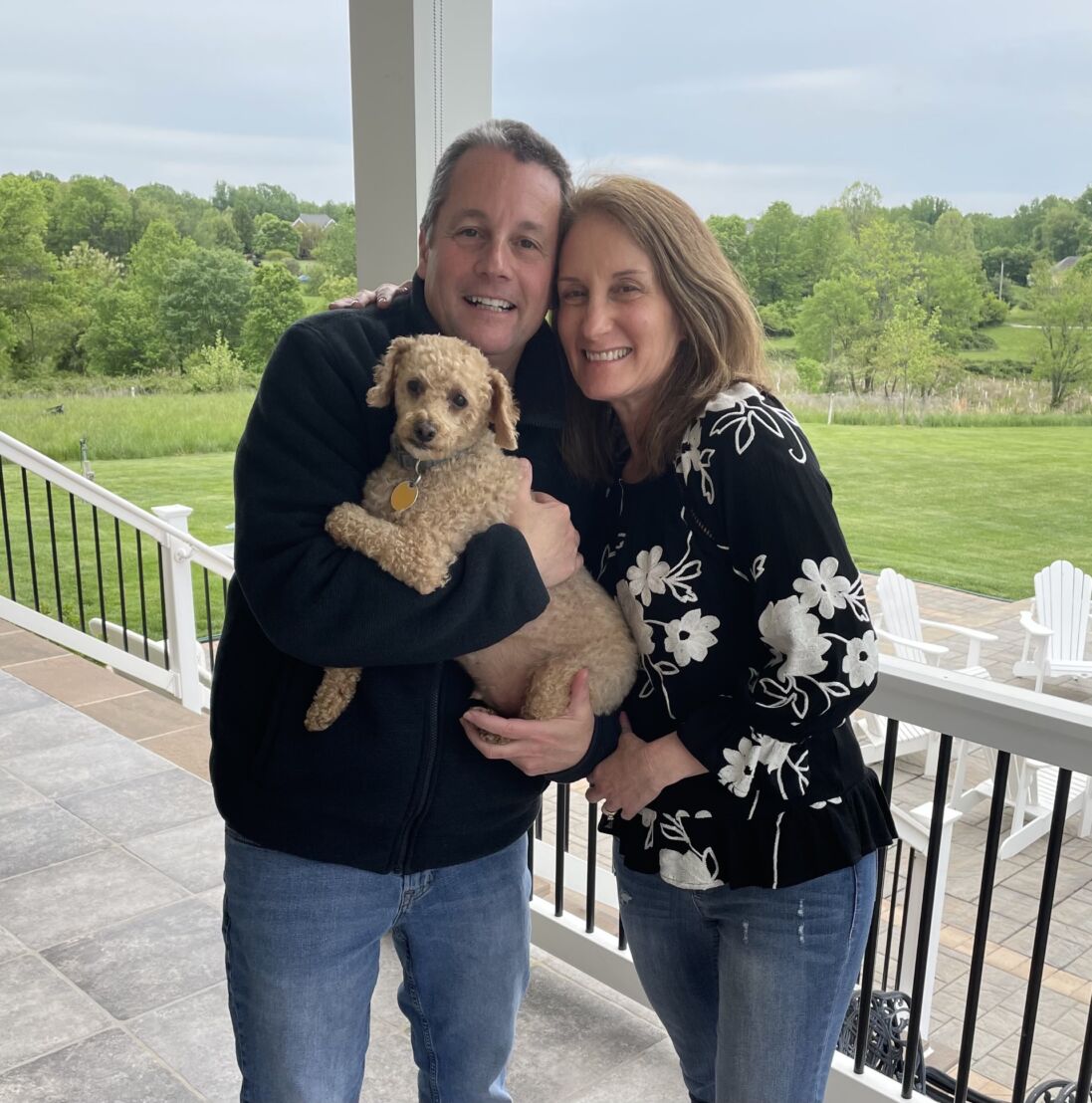
When Keith Alan Davis moved into his waterfront home in Shady Side, he stood before the wall of windows overlooking the West River leading to the Chesapeake Bay and told his brother, “That’s what I want to see every morning when I have my coffee.” It was a simple wish that captured everything about him — his appreciation for calm, connection and a life built around people he loved.
Davis died suddenly on Oct. 1 at age 59. The cause was an aortic dissection, a tear in the main artery that occurs without warning. His death shocked his family and the wide circle of friends, neighbors and former colleagues who had stayed close to him over the decades. “He was the kind of person who drew people in,” said his sister, Paula Grant. “Small children and animals always flocked to him. He was funny and kind and made everyone feel welcome.”
The youngest of three, Davis grew up in middle-class Randallstown in what Grant called a “blended but very loving family.” His parents, Nina and the late Richard Davis, emphasized hard work, honesty and doing right by people. “We were taught to be self-sufficient,” said his brother, Michael Davis. “Keith took that to heart. He worked hard for everything he achieved.”
Judaism was woven into that upbringing. His grandfather, Cantor Benjamin Grobani, served for decades at the Reform Oheb Shalom Congregation in Baltimore. Keith became a bar mitzvah there, and though he wasn’t active in synagogue life as an adult, he remained connected to his family’s Jewish traditions. “He was always at the table for Passover, Chanukah and Rosh Hashanah,” Grant said. “That was important to him and to our mother.”
Davis’ gift with people showed up early. As a young man selling shoes, he won awards for sales because customers liked him and trusted him. “He was personable, he made people laugh and they trusted him,” Michael Davis said. “That stayed with him his whole life.”
When personal computers began to take off, Davis taught himself the technology and saw an opening. He launched PC Systems and Services in Towson, selling and installing IBM-compatible computers and doing small office networking. “He didn’t have investors or a bank loan, just determination and a few people willing to give him a chance,” Michael Davis said. “He was honest and dependable, and that’s why people kept coming back.”
Grant said her brother’s success came from both intellect and empathy. “He was very smart — self-taught when it came to computers — but what really made him successful was how much people liked him,” she said. “He had this instinctive business sense, but it was his warmth and humor that drew people in. He could talk to anyone.”
After he sold the business, Davis lived for a time in Florida but eventually returned to Maryland. He had always been drawn to the water, and Shady Side, just south of Annapolis, gave him what he wanted most — a waterfront view, a boat, friendly neighbors and family nearby. “He became the mayor of the neighborhood,” Michael Davis said.
“Everybody knew him. He was the guy walking his dog who always stopped to chat.”
Grant said her brother’s home near the bay was a gathering place. “When we’d go visit, he’d have crab feasts in his backyard,” she said. “He’d invite family, neighbors and friends. It was such a close community, and he was right at the center of it. He was so happy there — it was really his dream life.”
Davis’ compassion was most visible in the way he cared for his dog, Cooper, who developed severe diabetes. The dog needed insulin injections twice a day, timed to when he ate. The regimen sometimes took hours. “That dog was alive only because Keith was alive,” Michael Davis said. “No one else could or would have given up what he did for that dog. He even stopped traveling because no one else could manage it.”
Grant said the devotion reflected who her brother was. “Keith loved animals deeply,” she said. His cat, Frankie, was equally loved, and the three of them — Keith, Cooper and Frankie — became a familiar sight in the neighborhood.
Though he had no children, Davis poured himself into being an uncle. He was “the fun uncle,” Grant said, to her four daughters, taking them out, letting them eat candy and turning ordinary days into adventures. “He just loved being with them,” she said. “He had this wonderful silly side — that’s what they’ll always remember.”
After his death, the family found cards and letters from his nieces and from children of friends addressing him as “Uncle Keith.” “He saved everything,” Michael Davis said. “He was more sentimental than we realized.”
His death was especially hard to grasp because he had seemed healthy. “He was at the gym the day before,” Grant said. “He was out to dinner the night before. There were no signs.” The suddenness only underscored how many people he had kept close. “He stayed close with people from elementary school, high school, work, our old neighborhood — everyone,” Grant said. “He called people on their birthdays. He didn’t let friendships go.”
For his brother, that loyalty defined him. “Since he passed, people have been reaching out to me just to get together and talk about Keith,” Michael Davis said. “They want to sit with someone who knew him and remember him. That tells you the kind of impact he had.”
Grant said she will remember her brother’s ease with people, his laugh and the way he made space for everyone at the table. “He laughed easily, he loved deeply and he made everyone around him feel cared for,” she said. “He just had that kind of heart.”
Ellen Braunstein is a freelance writer.