Tali Cohen
Over the past few weeks, my family and Jewish families across Maryland walked into synagogues to observe the High Holidays. We greeted friends we had not seen since last year, found our familiar seats, and joined together in prayer and reflection.
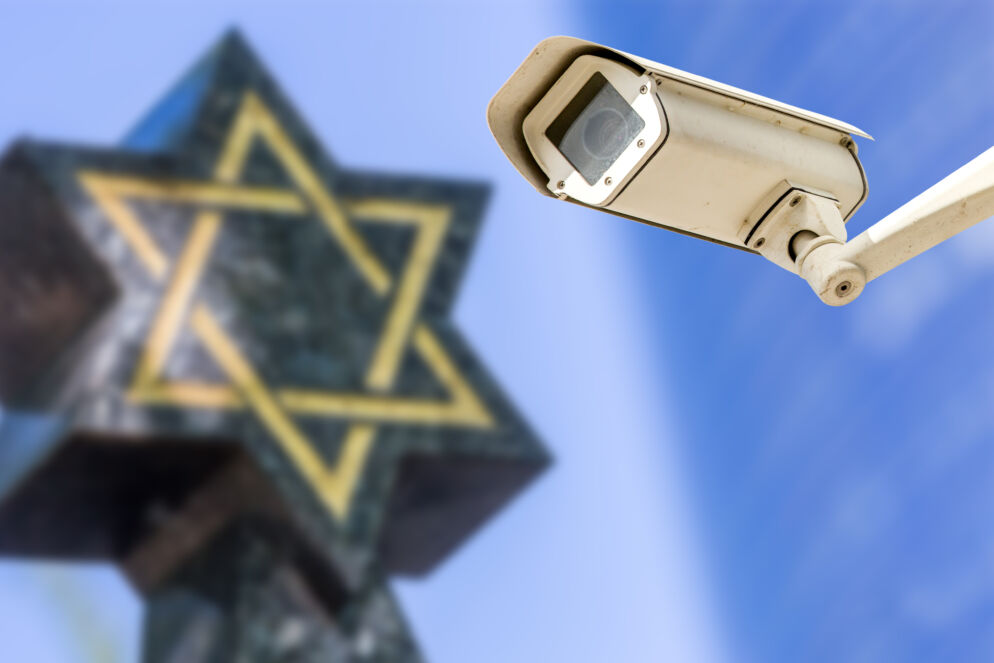
We also noticed police cars and officers’ presence outside and in some cases even inside, and they were not just there to direct traffic.
For some, seeing that car brought a sense of comfort and security. Every time I go to synagogue with my family, I breathe a sigh of relief seeing a police car outside, knowing law enforcement is there helping keep me and my loved ones safe. It means someone is watching, ready if something goes wrong.
But the fact that security is needed at all is worth pausing on.
No one should need armed security outside of their house of worship to feel safe. No one should have to scan the sidewalk before walking through the doors to pray. No one should have to debate whether it is safe to be celebrating a holiday or a milestone with their community.
Yet for Jewish communities, and increasingly for religious communities across the country, security has become an unavoidable part of gathering.
In 2025 alone, ADL recorded 181 antisemitic incidents in Maryland. That was a 49% decrease from the record 356 incidents reported in 2024, but still 285% higher than the 47 incidents recorded in 2020. In 2025, there were 41 incidents recorded at Jewish institutions across the state.
This threat goes beyond Maryland’s borders.
Nationally, antisemitic assaults increased by 4% in 2025, while assaults involving a deadly weapon rose by 39%. And we cannot forget the numerous tragedies and near tragedies that have piled up over the last few years against Jewish communities with horrific predictability: Pittsburgh, Pennsylvania; Poway, California; West Bloomfield, Michigan; Colleyville, Texas; Washington, D.C.; and Boulder, Colorado.
The High Holidays brought some of the largest Jewish gatherings of the year, making the season feel like a vulnerable moment for our community.
The good news is that we are better prepared thanks to legislative initiatives and community security funding that are making our synagogues and churches and mosques safer. For example, Maryland lawmakers recently took an important step to protect the fundamental right of every person to worship freely.
Earlier this year, the Maryland General Assembly unanimously passed legislation that ADL helped draft, which prohibits the use of force, threat of force or physical obstruction to interfere with or physically injure someone who is lawfully exercising their right to religious freedom at a place of worship.
ADL testified in support of this vital legislation, which passed unanimously in both the House and the Senate. Gov. Wes Moore signed the bill in May, and the new law goes into effect on Oct. 1.
At a time when nearly every issue seems to divide us along party lines, this unanimous support sent a clear and powerful message that in Maryland, protecting the right to worship proved stronger than partisanship.
A churchgoer should not have to push past someone physically obstructing an entrance to attend Sunday services. A Muslim family should not be prevented from entering a mosque for Friday prayers. A Jewish person should not be forced to choose between walking through threatening crowds and turning away from synagogue on Rosh Hashanah.
That principle should be self-evident. As a mother, I want my children to grow up in a community where they are physically safe and can practice their faith freely.
Peaceful protest is a cornerstone of our democracy. The First Amendment protects freedom of expression, freedom of religion and freedom of assembly. Those rights can coexist. People may voice their views without using force, threats or physical obstruction. Maryland’s new law draws that distinction clearly and appropriately.
Marylanders of every faith will now have explicit legal protection from force, threats of force and physical obstruction when they are lawfully exercising or attempting to exercise their religious beliefs at a place of worship.
Legal protections, however, are only one layer of the work required to keep our faith communities safe. A law can establish consequences, but it is incumbent upon all of us to build the culture of mutual respect and communal solidarity we need. That deeper work belongs to all of us, and in the New Year, I’m resolving to make that happen.
This High Holiday season, Jewish Marylanders once again gathered in joy and hope. We were grateful for the officers and security professionals who helped keep us safe. We should and must continue working toward a future where their presence is necessary no longer.
Tali Cohen is the regional director of ADL Washington, D.C.