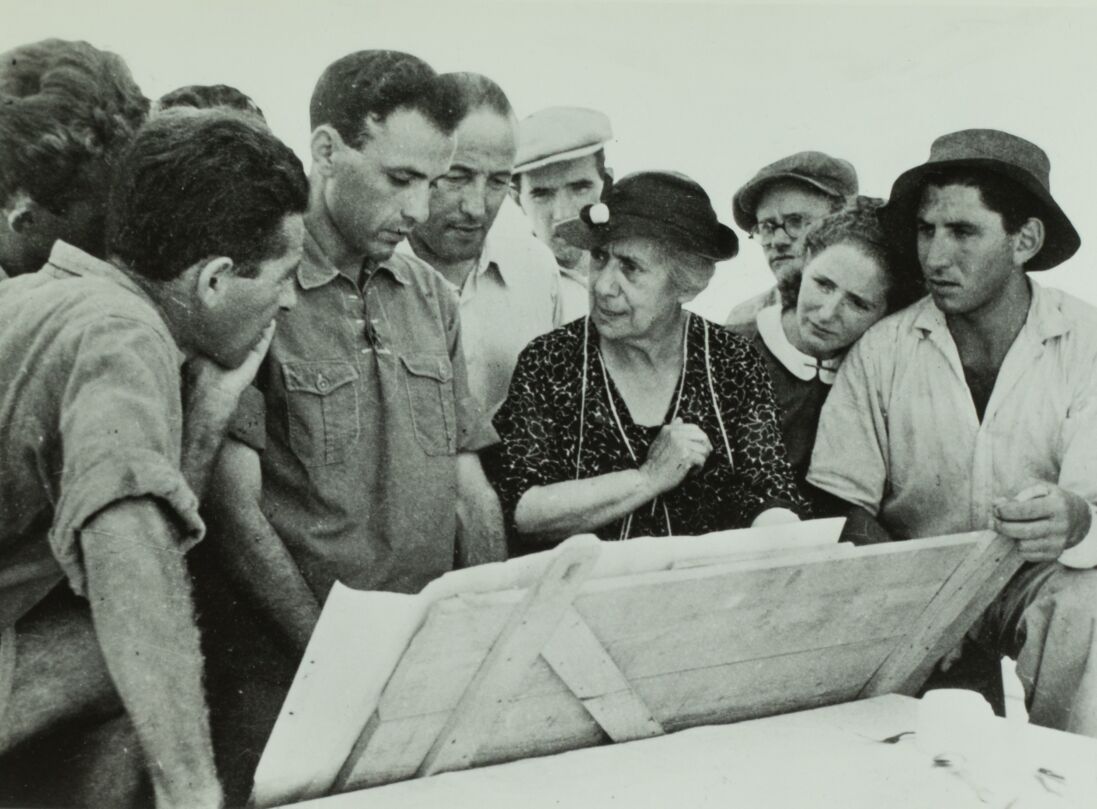
Abby Ginzberg has made a lot of films. None, however, were quite as important to her or as personal as “Labors of Love: The Life and Legacy of Henrietta Szold.”
Ginzberg, as it turns out, is a distant relative of the titular Szold and the granddaughter of a man who played an important role in her story. For this reason, and others, she spent years in preparation to create the documentary focused on the pioneering Zionist and founder of Hadassah, the women’s Zionist organization.
“Even in the mid-90’s, I thought about making this movie, but as I say in the film, Henrietta was not speaking to me yet. I couldn’t figure out how I would tell her story, or what I wanted to tell about it. Twenty years later, it just became clear that I either had to do it now or I was never going to do it,” she said. “I just kept thinking to myself, ‘Do I really want to go to my grave not having made this movie?’”
Released last year, the film tells Szold’s story from her origins in Baltimore to her time in Mandatory Palestine fighting for Jewish self-determination and the rights of the Palestinians who occupied the land when Jews arrived. Ginzberg is coming to Baltimore on March 24 to present a screening of the film at the Gordon Center for the Performing Arts.
“I needed both more experience as a filmmaker and more experience as a wise woman to be the right person to tell the story,” Ginzberg said. “By waiting those 20 years, I think I was finally ready to be in dialogue with Henrietta … it’s like for 20 years she was whispering in my ear, but I wasn’t able to hear what she was saying.”
Ginzberg is the granddaughter of Szold’s longtime friend and unrequited love, Louis Ginzberg, in addition to being a distant cousin of Szold’s. That element added a degree of dedication that Ginzberg hadn’t experienced on her other projects.
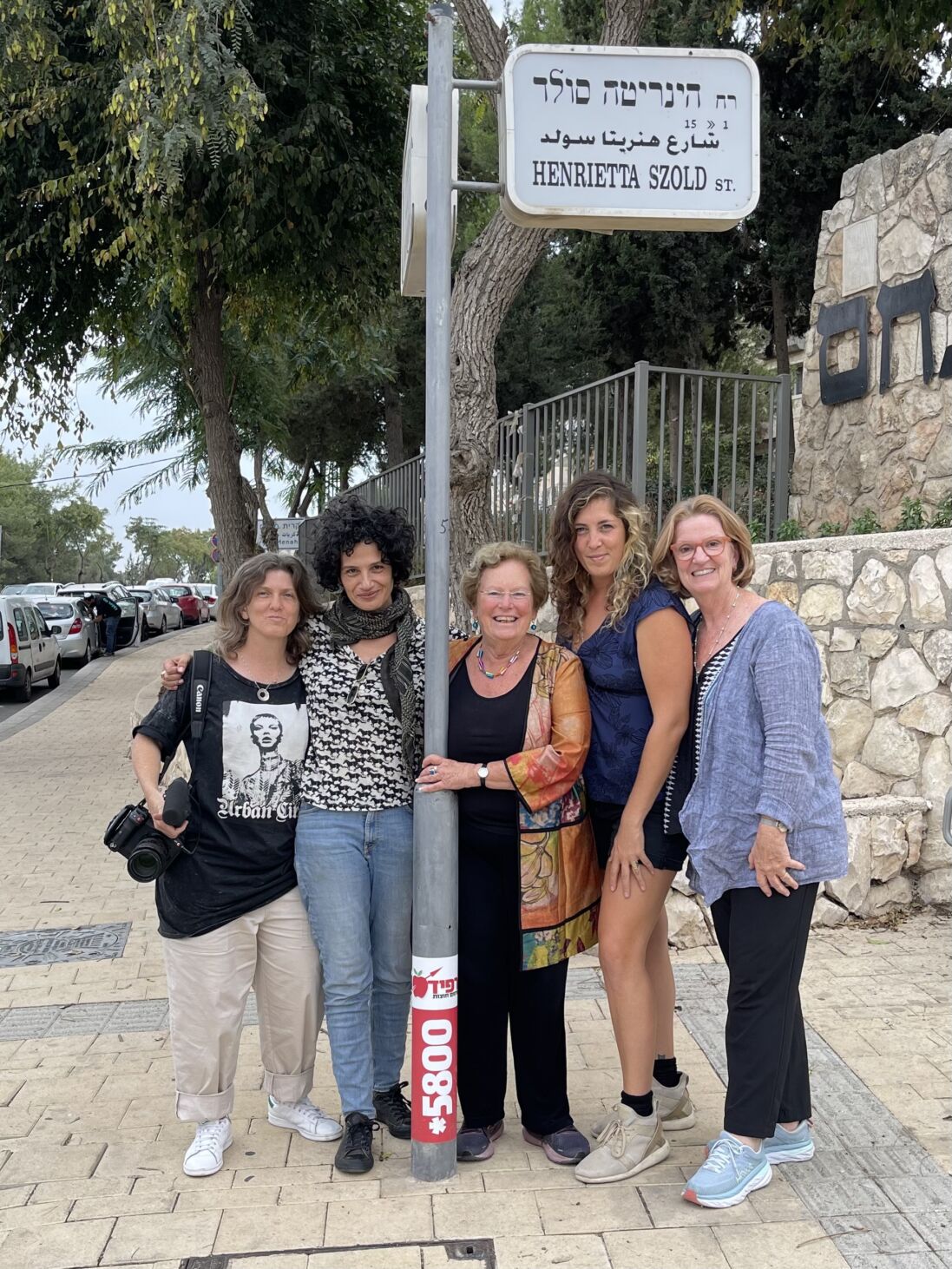
“This film is different because it involves my family. So the level of responsibility that I felt to get it right is so that both my Szold and my Ginzberg cousins, who are the only people who are still alive to critique it, would feel that I did a good job of representing both Henrietta and Louis Ginzberg,” she said. “Since I’m the person who stands at the intersection of these two families, I was really, in a way, the right person to do this.”
Ginzberg made the artistic choice to tell the story of Szold’s trailblazing work with Hadassah and the Israeli Ihud political party largely from her own perspective. She said this was the truest way to honor her relative’s tale.
“I really present the story from Henrietta’s point of view, especially the breakup. That was very important to me — it’s like there’s no way to really critique it. This is what she thought; this is what she felt; this is how it unfolded for her. And my job is to be as true to that experience as I could be, and to represent it as authentically as I could,” Ginzberg said.
The film has been well-received by audiences, with some coming up to Ginzberg after a given screening and telling her it brought them emotions they didn’t expect or even moved them to tears. Ginzberg said that, typically, about a third of any audience has heard of Szold prior to seeing the film.
Szold’s name has been lost to history for many, despite her numerous accomplishments.
She fought to keep Hadassah a women’s organization, instead of it being absorbed into the Zionist Organization of America. In addition to her pioneering feminist and Zionist work, Szold was a proponent of an equal Israel where Arabs were afforded representation just like Jews.
“She really felt like, ‘Here is a population of Arab people who have been living in the same land that we’re trying to claim. We have to be in dialogue with them. We have to work something out with them,’” Ginzberg said.
A story that exemplifies this as well as any is that of Szold’s funeral arrangements, which she made herself.
“When I first went to Israel to shoot the film, I didn’t know she had an Arab grave tender family that’s been managing her grave since she died in 1945. When I met Abed, the grave tender, he was doing it because his grandfather got him into the business. Henrietta’s decision to be buried at the Mount of Olives was worked out between her and Abed’s grandfather,” Ginzberg said. “The idea that she worked this out with an Arab man who worked at the local cemetery is sort of amazing to me, and it was a big ‘aha’ moment for me when I got to Israel and thought ‘wow, three generations of this family tending to her.’”
The grave tender and his daughter came to the first screening in Jerusalem and received a standing ovation.
For Ginzberg, the process of creating and screening the film is about more than just showing a movie to audiences. In fact, she has been able to relate to her subject and relative Szold through this journey, which is not something she takes for granted.
“I’m 75 [years old], schlepping around the country with this film, taking it to all kinds of audiences. And, you know, I feel a little like Henrietta. It’s like somebody could say to me, ‘You should take it a little easier.’ And Henrietta would say, ‘No, I have work to do. It’s not time for me to retire,’ and that’s how I’m feeling,” Ginzberg said.