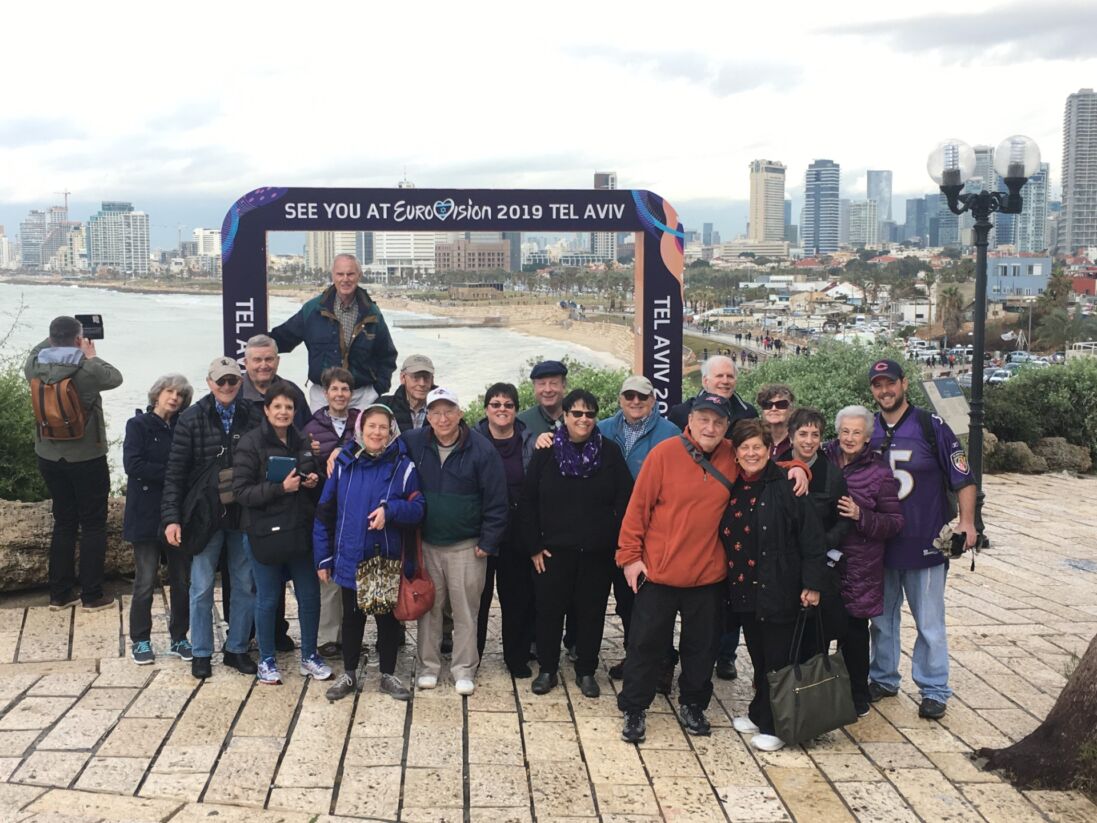
For the first time in seven years, Moses Montefiore Anshe Emunah Hebrew Congregation will travel to Israel for Passover and visit Baltimore’s sister city, Ashkelon.
Pre-pandemic, the congregation would host a group trip to Israel every couple of years, according to Rabbi Yerachmiel Shapiro. However, Shapiro said this trip isn’t like the others.
“The goal is to reconnect people who haven’t been to Israel in a long time because of COVID and the attacks, and to make it a meaningful trip for them,” Shapiro said. “It helps many people process the events of the last five years and put them in a context that is built on their love for Zionism and Israel. It’s not something that would just happen in the news; it’s something that we’re a part of.”
Shapiro added that everybody in the community is welcome to join.
The trip itself will be 10 days long, from March 29 to April 10. Instead of like previous trips, where the group would travel throughout Israel, this visit will focus on southern Israel.
Attendees will stay exclusively in Ashkelon, one of the residential areas hit directly during the attacks of Oct. 7, 2023. The city is a little over 12 miles from the Gaza border.
“That town has a big American expat community. It’s a place where people seem to be moving, from Baltimore. I know people from Baltimore who moved to Ashkelon,” he said. “It’s sort of a taste for me and for others about, is this a place we could imagine ourselves living? I think there are a lot of people who would like to find their place in Israel.”
Shapiro said he believes a strong connection to Israel is essential for any Jewish person.
“For me, it’s really important, because with COVID and then the wars, it’s just been so long since my congregants and I have gotten the chance to go there, and when you don’t go there, something feels not right in your Judaism. It’s a very important part of being a Jew to go and support Israel and [be] connected to the land.”
Shapiro added that visiting the city during Passover is a powerful way to acknowledge and “embody the pain” of Oct. 7 as a modern parallel to the slavery in Egypt. “Celebrating the survival and the resilience and even the incredible strength and revitalization of Israel after [the war] … I think it’d be really powerful for people.”
While Shapiro sees this trip as an opportunity for reflection and a show of solidarity, he also said a challenge for some may be feeling safe enough to go on the trip after the attacks.
“I think there’s people who are still afraid to go to Israel, like, ‘What if Iran attacked? What if there’s a war?’” he explained. “But you could be afraid for the rest of your life, and, it’s just for me, I have such a deep connection to the land of Israel, and I don’t want it to be any longer before I go back.”