If you have visited many synagogues throughout the United States, you might notice much of the same thing. There is a sanctuary, a social hall, maybe a catering space, a library and some classrooms. In most synagogues, you will also probably see a retail space. You can call it a gift shop or a Judaica shop, but you will know what it is when you see it.
But you would be mistaken. Today, in the retail environment with its “anything you could want” online mindset, you often do not need to visit a synagogue to get Shabbat candles, a menorah or a seder plate. But then, why do so many local synagogues still operate these establishments?
Researching the modern-day synagogue gift shop, you would find that many of these shops opened in the late 1940s. Jews wanted to expand their homes, add ritual items and find a place to purchase talitot and kippot after World War II.
Due to demographic shifts, more Jewish families were moving to larger cities, and synagogues became more popular as gathering places. Synagogue shops provided a service in providing ritual objects and gifts for Jewish families.
In the 1950s and ‘60s, sisterhoods played a greater role in establishing and running gift shops. Gift shops were more than just fundraising vehicles. They were also places of education and served as repositories of important ritual items for Jewish families.
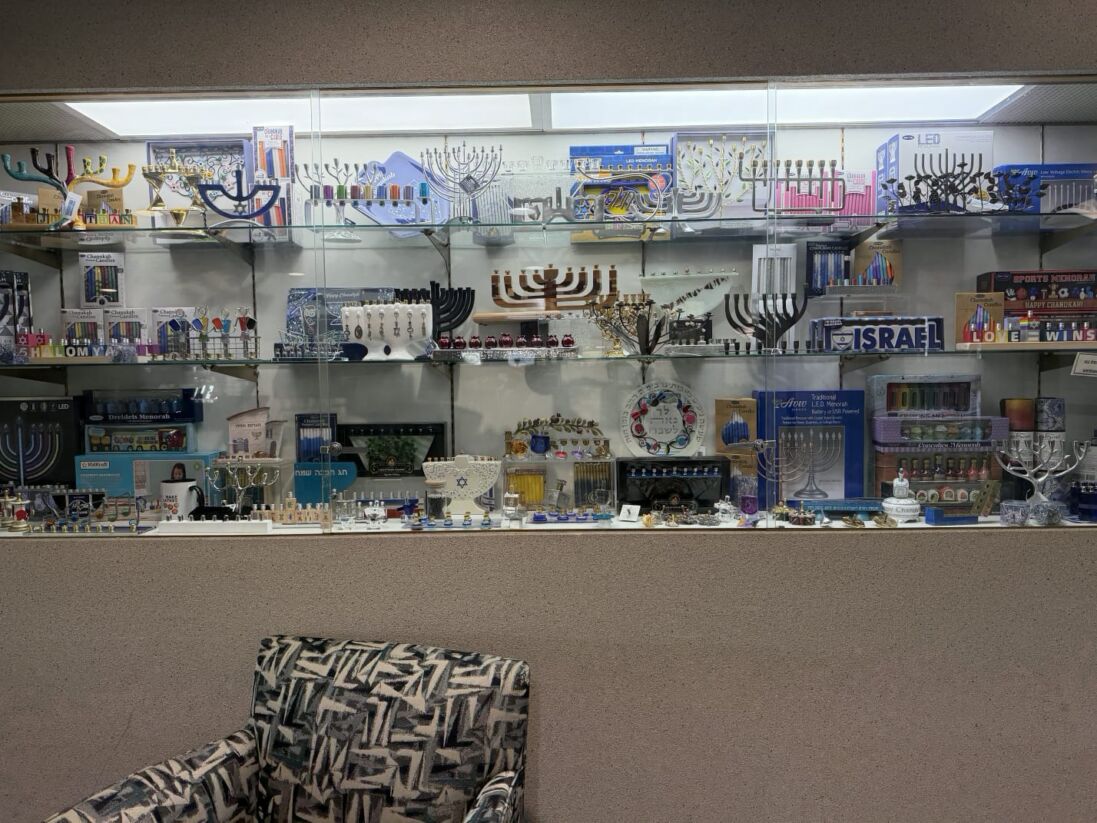
In the 1970s, most synagogues, especially Conservative and Reform temples, had display cases as well as actual shops. Even when the shop was not open, congregants could see what was available.
Many shops carried items from Israel, as well as some by local artists and craftspeople. You could buy a gift for newlyweds, bar and bat mitzvahs and any items you might want to own to enrich your Jewish life. With the rise of online shopping, you might think that there is no longer a need for synagogue Judaica shops.
Today’s synagogue gift shops do much more than sell items. They act as a cultural hub for synagogue members. Each of the synagogues profiled here emphasized that their shops serve as gathering places and social hubs for members and guests. Most are open during Sunday school hours when parents can drop by, catch up and see the latest merchandise.
Beth El Congregation has one of the largest gift shops in the area. Executive Director Ben Wachstein said that members of the synagogue expect Judaic items to be available for purchase in the building. He stated that this synagogue project, like many others, is run by members of the Beth El Sisterhood. Mr. Wachstein said, “It is a lovely experience just to spend time with those running the shop, because they are friends.”
Volunteer Co-Managers Marsye Kaplan and Susan Goldscher feel that coming into the Beth El Judaica Shop is like the feelings engendered in the old TV sitcom “Cheers.” Everybody knows everybody, and it feels like you are visiting with good friends. They like to say, “We educate as much as we sell.” When people enter their shop, they feel the building’s warmth, which helps build and maintain a close bond among members. Both women emphasized that they aim to have members understand the importance of these beautiful pieces and their place within Jewish life.
Kaplan and Goldscher have begun a very popular wedding registry so couples getting married can fill their new homes with special ritual objects given to them by people who care about them.
Anne King is in charge of the synagogue gift shop for the Chizuk Amuno Congregation. With the help of Sisterhood members, she has run the shop for 25 years. She is proud of the fact that 100% of the profits generated by the shop go to the schools on the Chizuk Amuno campus.
King stated that the goal of the shop is “to have people have things in their home to enrich their homes.” The shop serves all the families throughout the many programs run by the synagogue. She said that they are fortunate to have a great location within the synagogue, and the shop is promoted throughout the community. She also said that she and her dozen or so volunteers have a great relationship with volunteers running other synagogue gift shops, and sometimes can help when a specific item is needed that the other shop may not have in stock. King also emphasized that the shop is a gathering point for parents picking up kids in one of the school programs.
Temple Isaiah’s gift shop in its Howard County location has an interesting history. When Columbia’s Jewish congregations were all together in a multi-functional building in Oakland Mills, there was very little space from which to sell items. After moving to a building of its own, the gift shop is now right in a central location adjacent to the sanctuary. Robyn Gold is the shop manager and buyer, and has an unusual catch phrase she uses with synagogue members. “Why schlep to Baltimore?” Every individual piece has a backstory, which Gold loves to share.
The profits from the shop always go back into the shop to maintain and expand its inventory. Gold agrees with other gift shop managers that the shop is a gathering place where members can talk with each other and visit with those running the shop.
Paula K. Minsk is a freelance writer.